AI 3D model generators in 2026: Meshy, Tripo, Rodin and Hunyuan vs a finished asset
What Meshy, Tripo, Hyper3D Rodin, Hunyuan 3D and TRELLIS give you, what they cost (checked 31 October 2026), what raw output still needs, and when finished work pays.
AI 3D generation became a real industry in 2026. You type a description or upload a picture, and a minute later you have a textured 3D model. Meshy alone says it passed $100 million in annual recurring revenue in September 2026 (company-reported, press release). It is also a confusing market: a generation can cost a few cents or several dollars, and "game-ready" means something different on every site.
This post compares the main generators you can use directly, explains the difference between a raw mesh and a finished asset, and says when each is the right choice. We make finished assets, and we use several of these generators inside our own studio, so we have a side and a stake. We have tried to be fair, and every price links to the vendor's own page.
Checked on 31 October 2026. Prices and plans change often; check the vendor's page before you decide.
The generators
| Generator | Free option | Paid | One textured model | Source |
|---|---|---|---|---|
| Meshy | 100 credits a month; free-tier models are licensed CC BY 4.0 (credit required) | Pro, Premium, Ultra, Studio and Enterprise plans; Pro is 1,000 credits a month (shown to us as kr 200, about $20) | 30 credits for image-to-3D with a 2K texture | pricing, API pricing |
| Tripo | a monthly free allowance (its pricing page did not load for us) | plans from about $20 a month, per CostBench | 30 API credits for image-to-3D with texture on H3.1 | API docs |
| Hyper3D Rodin | generate for free, pay only when you confirm a result; 10 private assets | Creator $30 a month, Business $120 ($24 and $96 billed yearly); extra credits $1.50 each | 0.5 credits per Gen-2.5 generation by API | pricing, API |
| Tencent Hunyuan 3D | 20 free generations a day in its app, at launch; 200 free API credits | API $0.02 a credit, or 1,000 credits for $15 prepaid | 25 credits, about $0.38 to $0.50 | Tencent Cloud, Tencent |
| Microsoft TRELLIS.2 | free, open source (MIT), runs on your own GPU | — | your own hardware | GitHub |
So a raw textured model costs somewhere between a few tens of cents and about a dollar, plus the tries you throw away.
What each one is good at
These are real strengths, and for many people one of these tools is the right answer:
- Meshy has the broadest feature set in one place: text and image to 3D, remeshing on paid plans, rigging and animation on all plans, PBR textures, exports to FBX, OBJ, USDZ, GLB, STL and Blend, an API, and an official MCP server (pricing, MCP).
- Tripo is fast and cheap to iterate with, and its API adds quad topology (+5 credits) and smart low-poly (+10) as options, with PBR on by default (API docs).
- Hyper3D Rodin is strong on detail for hero assets, with Smart Low-Poly on Creator and high-poly quads on Business; its API can return meshes up to 10 million faces (pricing). It is also the built-in generator of the popular open-source Blender MCP (GitHub).
- Hunyuan 3D has the most generous free use and the cheapest API, with low-poly, topology and auto-rigging add-ons (Tencent Cloud). Its open weights (version 2.1) can run locally, but their licence excludes the European Union, the United Kingdom and South Korea (licence).
- TRELLIS.2 is free, MIT-licensed and runs on your own GPU, producing a GLB with PBR textures (GitHub). If you have the hardware and the time, nothing is cheaper.
What a raw generation is
A generator gives you one mesh made from one picture. Typically:
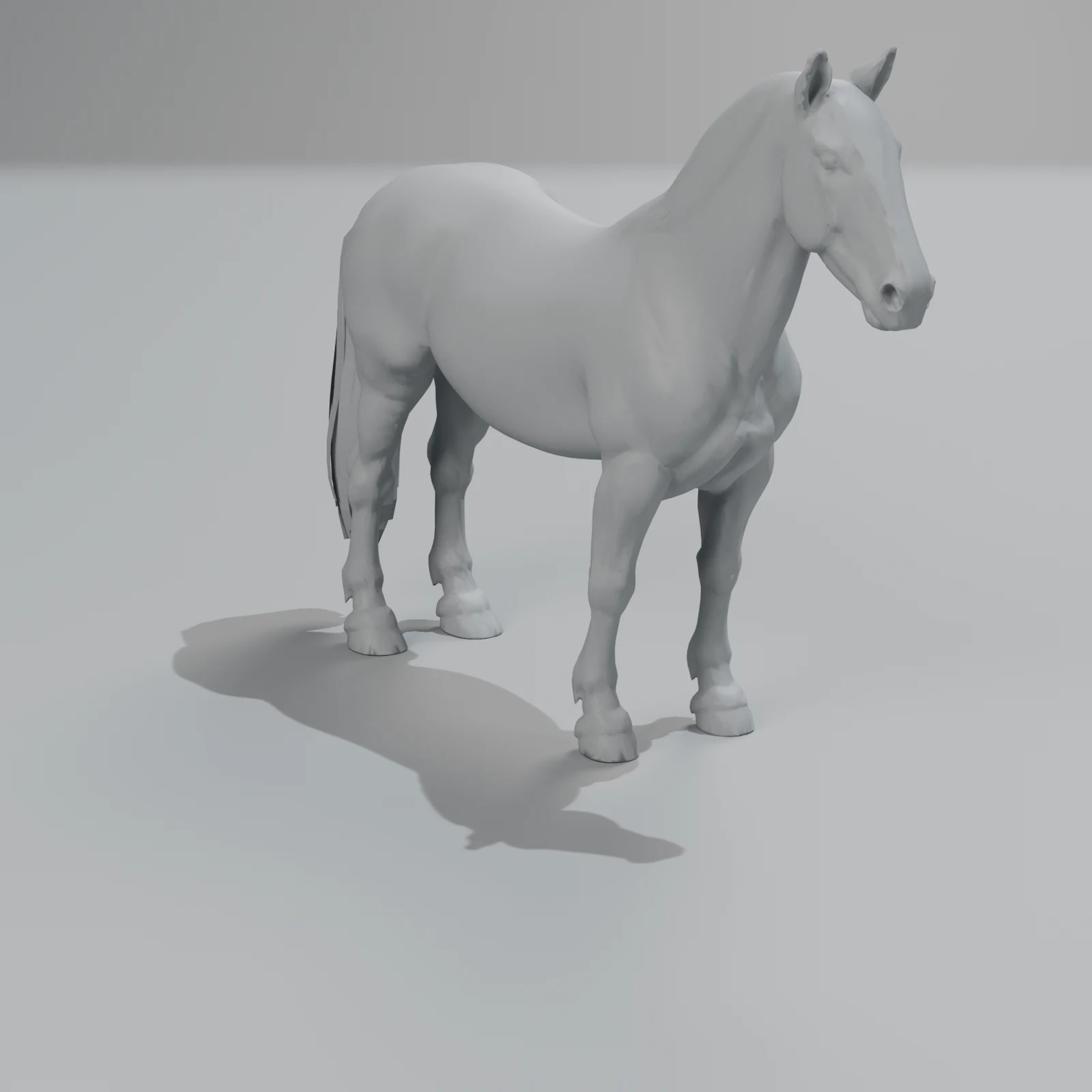
- a dense mesh, often a million triangles or more, because it comes from a voxel or surface reconstruction, not from a modeller (most tools now offer a lower-poly option as an add-on);
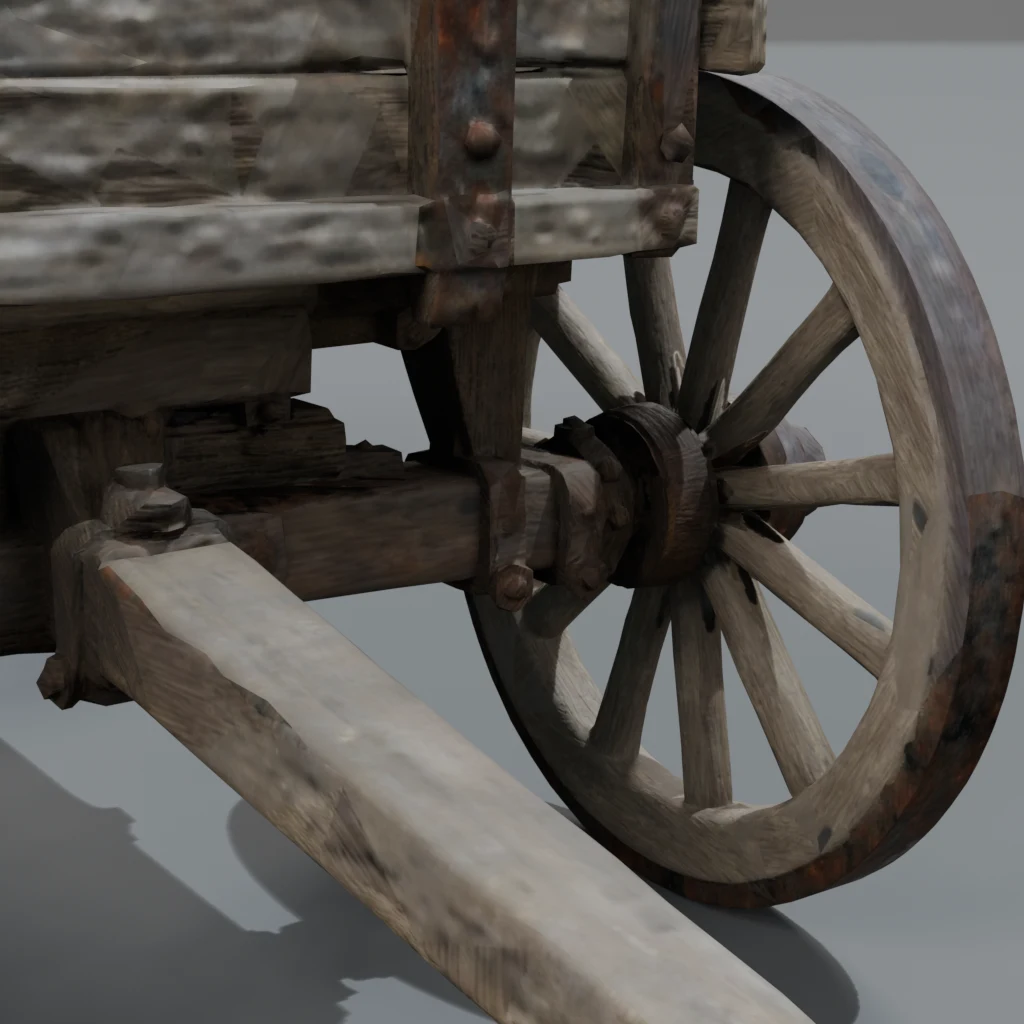
- automatic UVs and textures, sometimes with light and shadow baked into the colour, and often one smooth material over everything, so chrome, wood and fabric look alike;
- no idea of size: a chair and a house can come out the same size;
- one solid piece: doors don't open and wheels don't turn, unless you rig it yourself;
- glass painted as an opaque colour.
Even so, a raw generation is a lot for under a dollar, and for many uses it is enough.
What "finished" adds
A finished asset is a raw mesh plus the work a 3D studio would do before handing it over:
- Pick the best try. Make several versions, from different generators, and keep the best instead of the first.
- Clean it. Remove loose bits, close holes, reduce the triangles to a sensible budget.
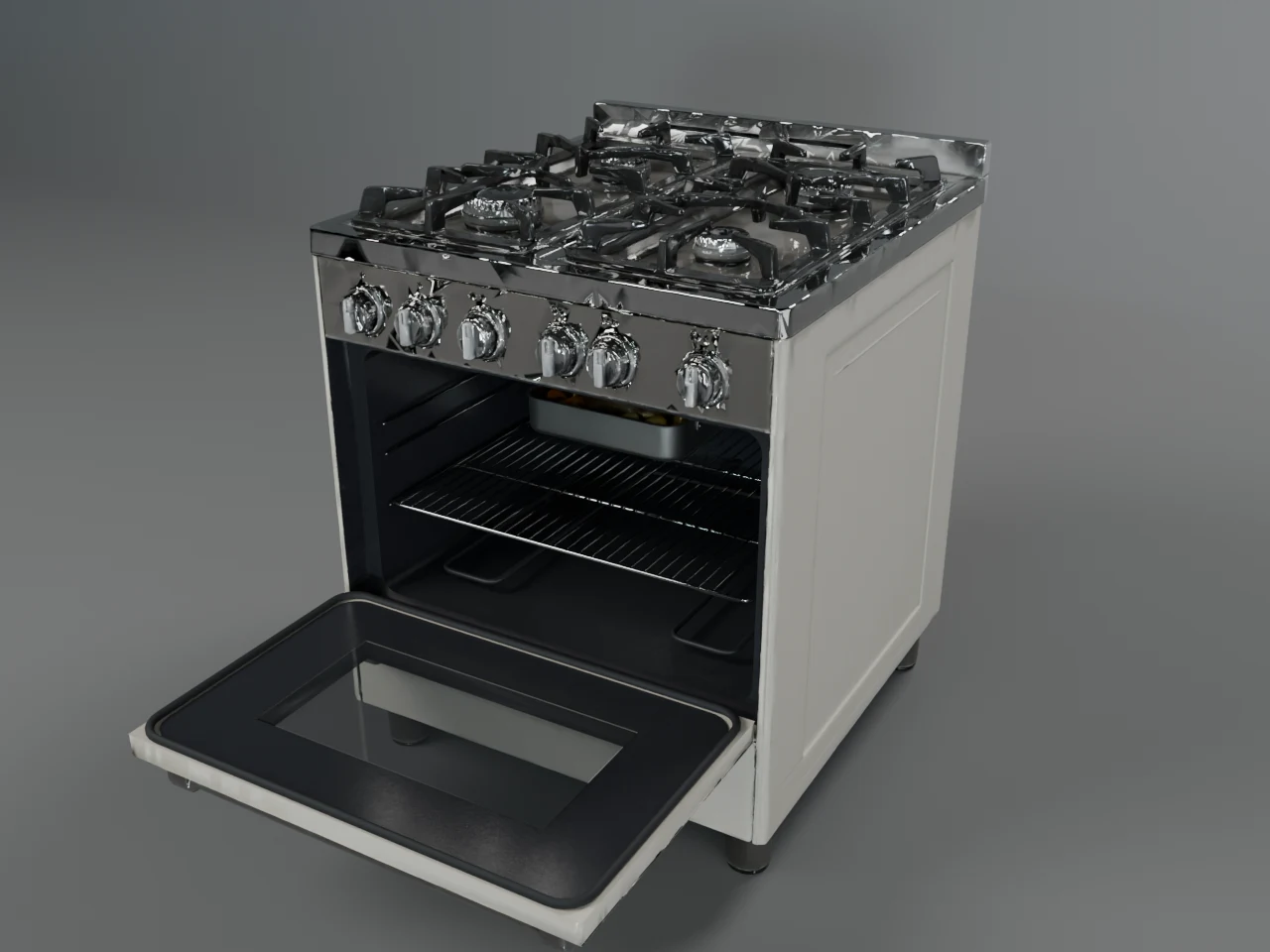
- Real materials. Bake proper PBR textures and give each part its material: metal that reflects, glass you can see through.
- Real size. Scale it to the size the real object would have, with the base on the ground.
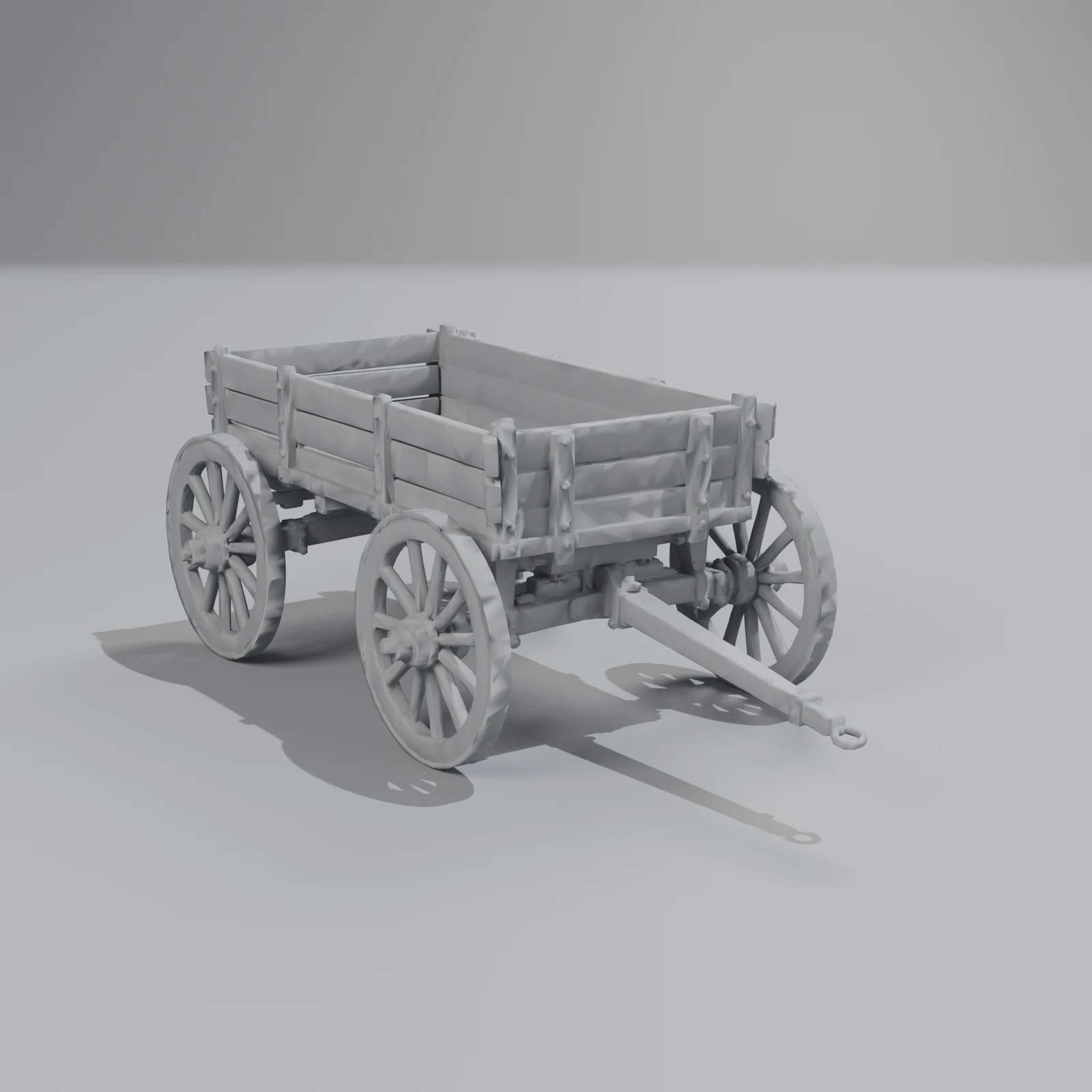
- Moving parts. Cut doors, lids, drawers and wheels into separate parts that move, with named clips.
- Every format and level of detail. GLB, glTF, FBX, USDZ, Blend and OBJ, at a standard and a low level.
- Check it. Look at it from every side, textured and in clay, before anyone gets it.
You can do all of this yourself in Blender. It is skilled work, and it takes longer than the generation. People pay for it today: hiring a freelancer or a studio for a single prop runs from tens to hundreds of dollars (our cost guide). Kaedim, which combines AI with in-house artists who check topology, UVs and materials (FAQ), lists Indie at $400 a month for 20 credits on its plans page, though its docs say off-the-shelf plans are temporarily closed.
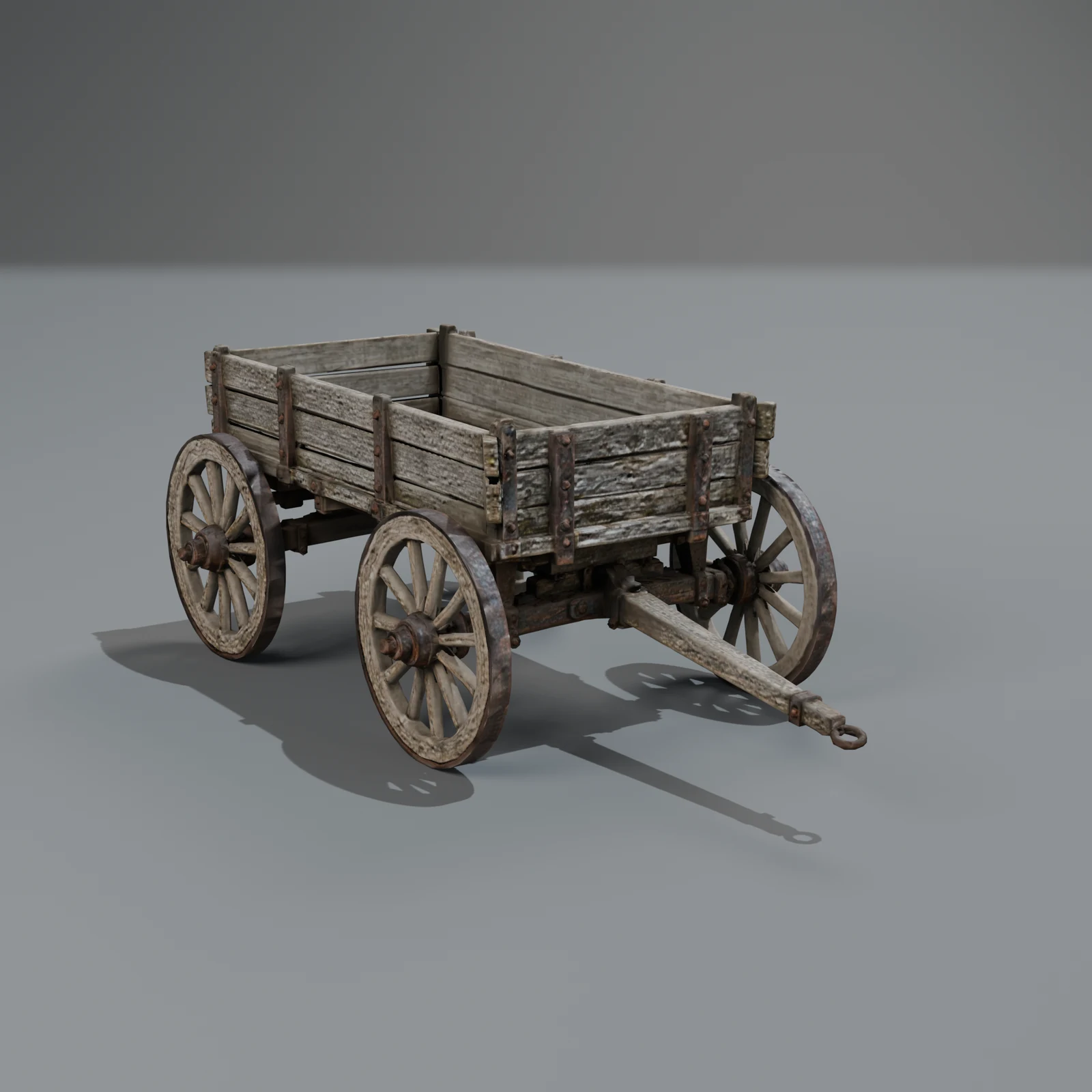
Where Sleipner fits
We don't train our own 3D model. We run a studio on top of the best ones: today Tripo 3.1, Hunyuan 3D 3.1 Pro and TRELLIS.2 for objects from a description, and three more for products from photos. Each object goes through the steps above, with a vision model as the art director. When a better generator comes out, we add it. How the studio works goes through every step.
That costs more than a raw generation. A Quick object (one generator) costs 350 credits and a Standard object (three generators and a judge) 1,000 credits; 1,000 credits cost $10. So a finished Standard object is about $10 (600 credits, about $6, at launch, until 2026-12-31): more than a raw mesh, much less than a person. New accounts get 600 credits free during the launch (400 after), and our free library shows the output before you spend anything.
Which should you use?
A generator directly is the better choice when:
- you are trying ideas and will throw most of them away;
- you have a 3D artist who will rebuild or repaint the model anyway;
- you need a rigged character, STL for printing or quad topology (several generators offer these; we don't yet);
- you want to run a model locally or offline;
- your budget is close to zero and you have time for clean-up.
A finished asset is the better choice when:
- you are a programmer, a small studio or a shop, and nobody on the team does 3D clean-up;
- the model goes straight into a game, a render, a product page or AR;
- real size, real materials, moving parts and several formats matter;
- your time costs more than the price difference.
Other ways to get a model: one-click AI 3D sites, marketplaces, freelancers and free libraries.
Questions
What is the best AI 3D model generator?
It depends on the job. For a cheap first try, Hunyuan 3D's free use is hard to beat; for many features in one place, Meshy; for fast iteration with topology options, Tripo; for high detail, Rodin; to run it yourself, TRELLIS.2. Rankings change every few months, which is why our studio uses several and picks per object.
Are AI-generated 3D models free to use commercially?
It depends on the plan. Meshy's free tier, for example, licenses models under CC BY 4.0, which allows commercial use with credit. Paid plans usually give you more rights. Read the terms of the plan you use; open weights have their own licences too.
Are AI 3D models game-ready out of the box?
Rarely. Raw output is usually dense, one piece, unscaled and with simple materials. It can be made game-ready; see what game-ready means for the checks.
Why does Sleipner cost more than a generator?
Because a generation is one step of eight. Standard runs three generators, reviews each version from ten views with a vision model, cleans, re-materials, scales, rigs and renders the best, and exports six formats. The price follows that cost.
Does Sleipner use Meshy, Tripo or Rodin?
Tripo, Hunyuan 3D and TRELLIS.2 for objects from a description, as of 31 October 2026. For products from photos we use Tripo, Hi3D and Rodin. We change the line-up when a better model appears.